Douay form Jonas · also Jonah · Old Testament · 48 verses
The prophet who ran the other way: sent to Ninive, Jonas takes ship for Tharsis, is thrown to the sea in a tempest, prays from the belly of a great fish, preaches forty days to a city that repents, and sulks under an ivy that withers in a night. Read complete in the Douay-Rheims, with the Latin Vulgate and the Spanish of Scío as further audio tracks to come, and Challoner’s seven notes in the margin.
Audio in three languages, soon
- English — Douay-Rheims · Jonah · Challoner’s revision, 1749–1752 · the video’s own audio
- Latin — Clementine Vulgate · Rome, 1592 · recorded; coming to YouTube as an audio track
- Spanish — Felipe Scío de San Miguel · Valencia, 1790–93 · recorded; coming to YouTube as an audio track
The Latin and Spanish readings are finished and will be added to the video as audio tracks, with captions in all three languages, once YouTube allows it on this channel.
“The Prophecy of Jonas” (Jonah), The Holy Bible, Douay-Rheims version, as revised by Bishop Richard Challoner, 1749–1752, with his notes (text from Project Gutenberg #1581). The second audio track reads the Clementine Vulgate (Sixto-Clementine, Rome, 1592) from the Latin printed in the Douay-Rheims and Latin Vulgate parallel at drbo.org, checked word for word against the eBible Clementine text. The third audio track reads the Spanish of Felipe Scío de San Miguel’s La Biblia Vulgata Latina traducida en español (Valencia, 1790–1793), from the Madrid printing of 1852, with the spelling modernised. Public domain.
The whole book, all four chapters and forty-eight verses, in Challoner’s Douay-Rheims. Two more audio tracks will follow on YouTube, reading the Latin of the Clementine Vulgate and the Spanish of Scío de San Miguel. Captions in all three languages come with them.

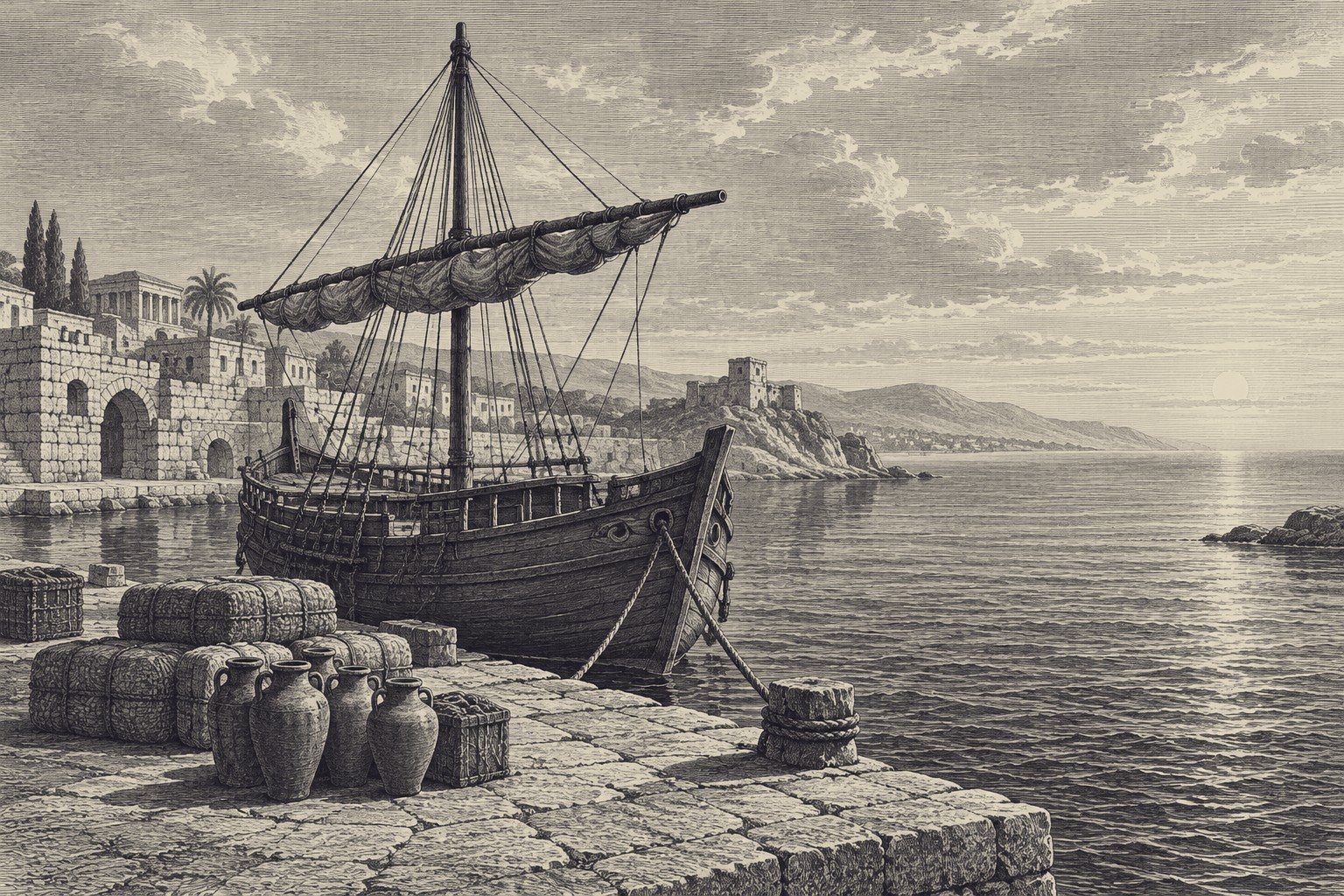
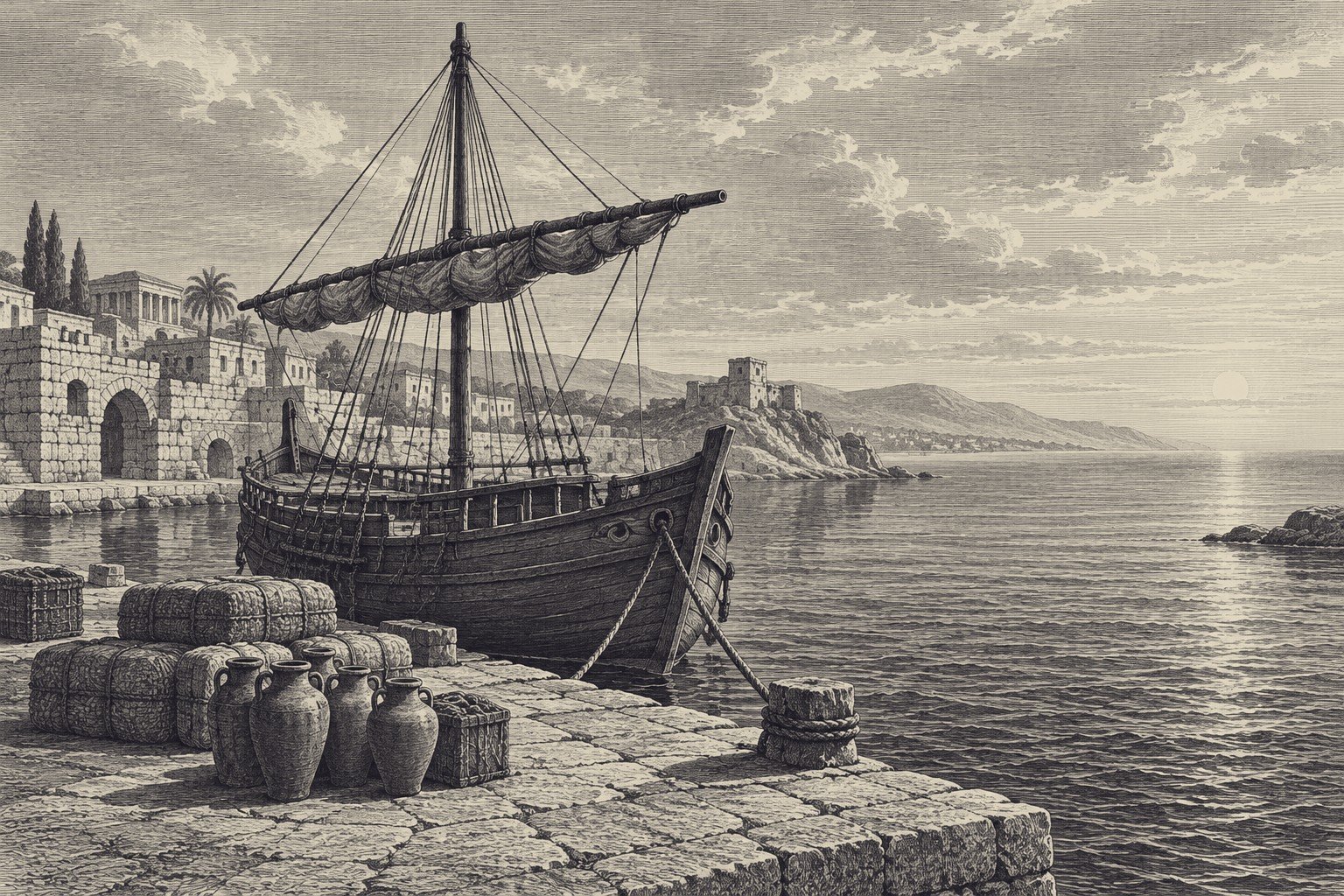
Joppe, for Tharsis — Joppe · at 0:31
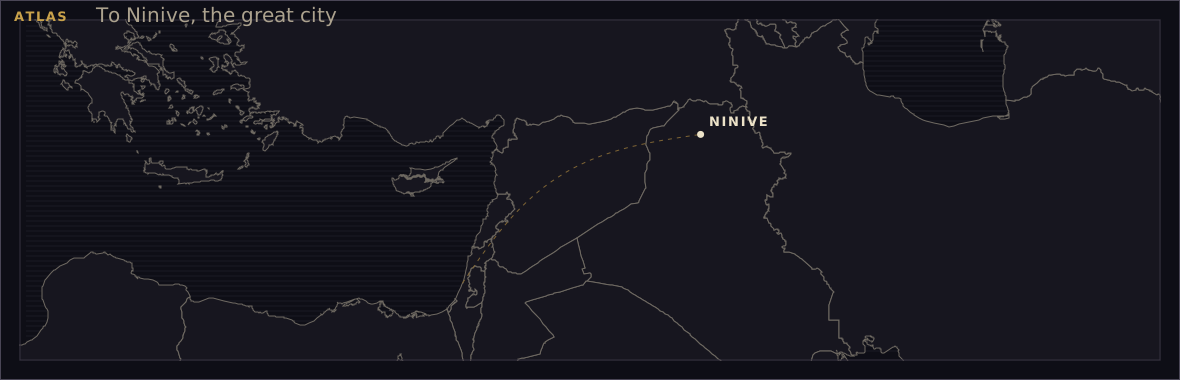
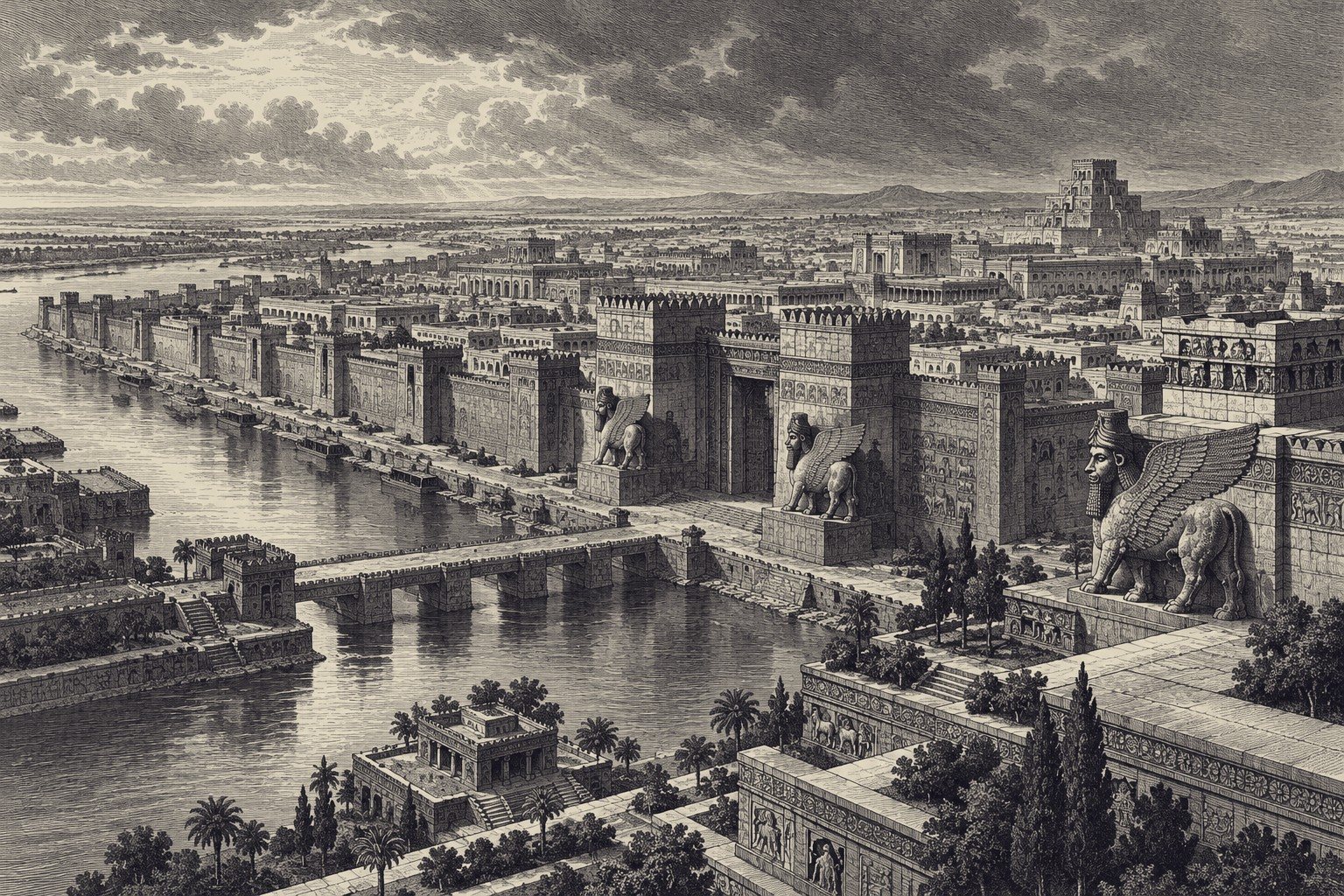
To Ninive, the great city — Ninive · at 5:21
- Jonas0:06
Challoner’s introduction places Jonas in the reign of Jeroboam the second (4 Kings 14:25), of Geth Opher in the tribe of Zabulon, in Galilee, and calls him “the only one among the prophets that was sent to preach to the Gentiles.” 1749–52.
- Ninive0:27
“The capital city of the Assyrian empire.” Challoner’s note on this verse. Nineveh in the Hebrew form: on the east bank of the Tigris opposite Mosul, in Iraq; one of its two mounds is Nebi Yunus, ‘the prophet Jonah’, where his tomb was shown.
- Tharsis0:43
“Which some take to be Tharsus of Cilicia, others to be Tartessus of Spain, others to be Carthage.” Challoner’s note on this verse.
- A deep sleep1:07
“This is a lively image of the insensibility of sinners, fleeing from God, and threatened on every side with his judgments: and yet sleeping as if they were secure.” Challoner’s note, 1749–52.
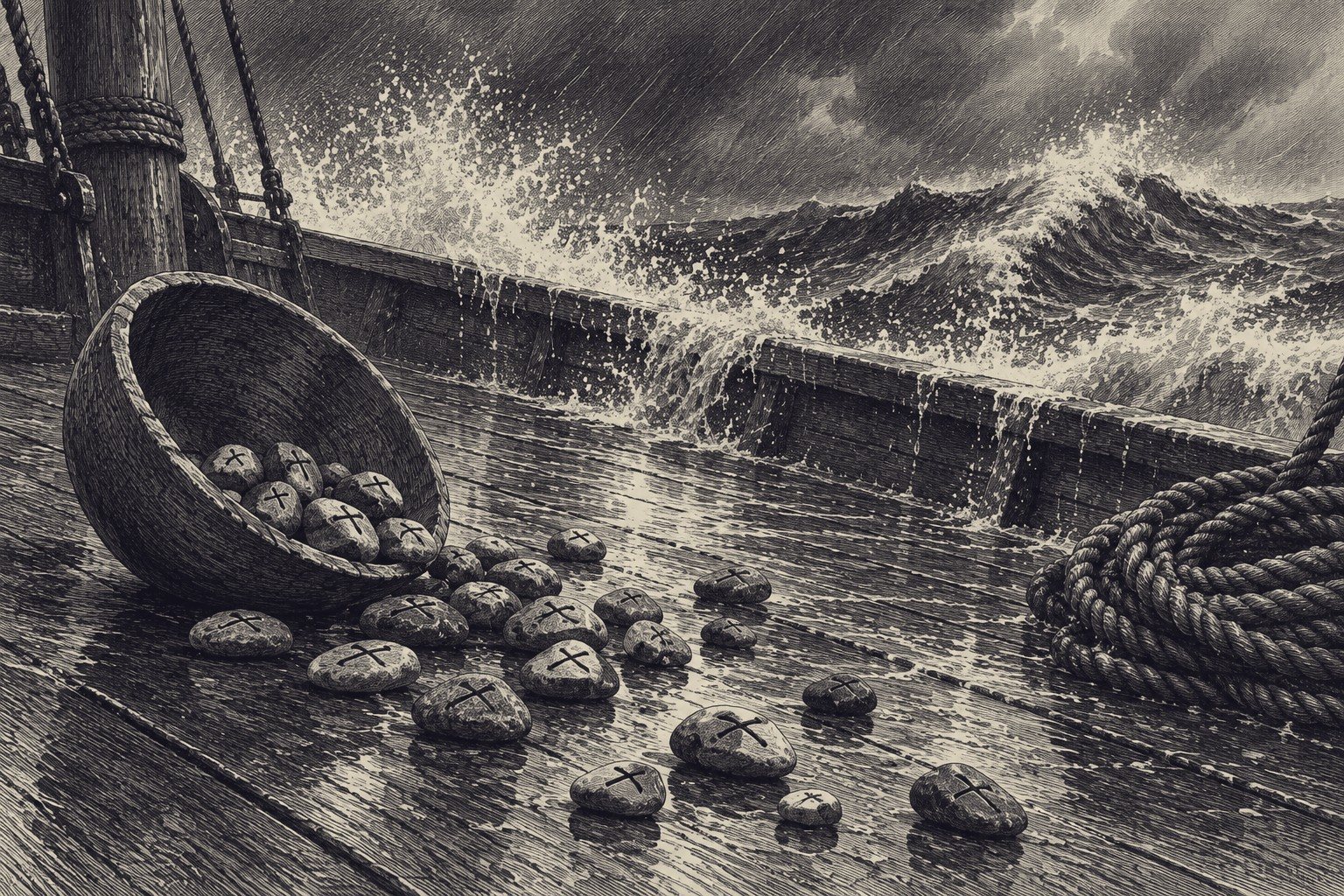
- Lots1:32
Marked stones or sticks drawn from a vessel or from a fold of the garment. Proverbs 16:33: ‘Lots are cast into the lap, but they are disposed of by the Lord.’
- The names2:05
Douay forms, with the Hebrew: Jonas (Jonah), Amathi (Amittai), Ninive (Nineveh), Joppe (Joppa, now Jaffa), Tharsis (Tarshish).
- The sign of Jonas3:31
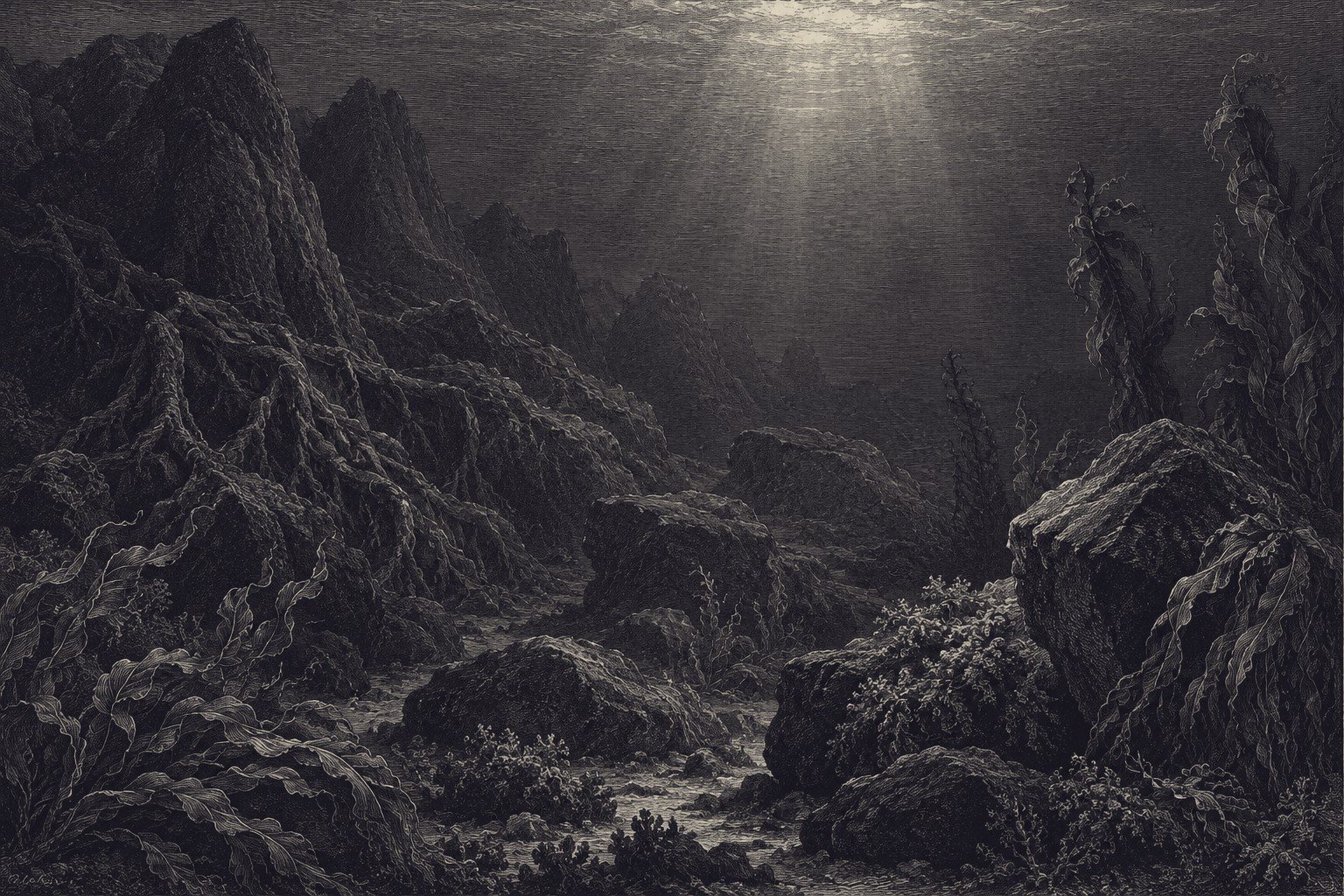
Matthew 12:40: ‘For as Jonas was in the whale’s belly three days and three nights: so shall the Son of man be in the heart of the earth three days and three nights.’ The book itself says only ‘a great fish’.
- Spoke to the fish4:57
“God’s speaking to the fish, was nothing else but his will, which all things obey.” Challoner’s note on this verse.
- Three days’ journey5:27
“By the computation of some ancient historians, Ninive was about fifty miles round: so that to go through all the chief streets and public places was three days’ journey.” Challoner’s note.
- Sackcloth6:22
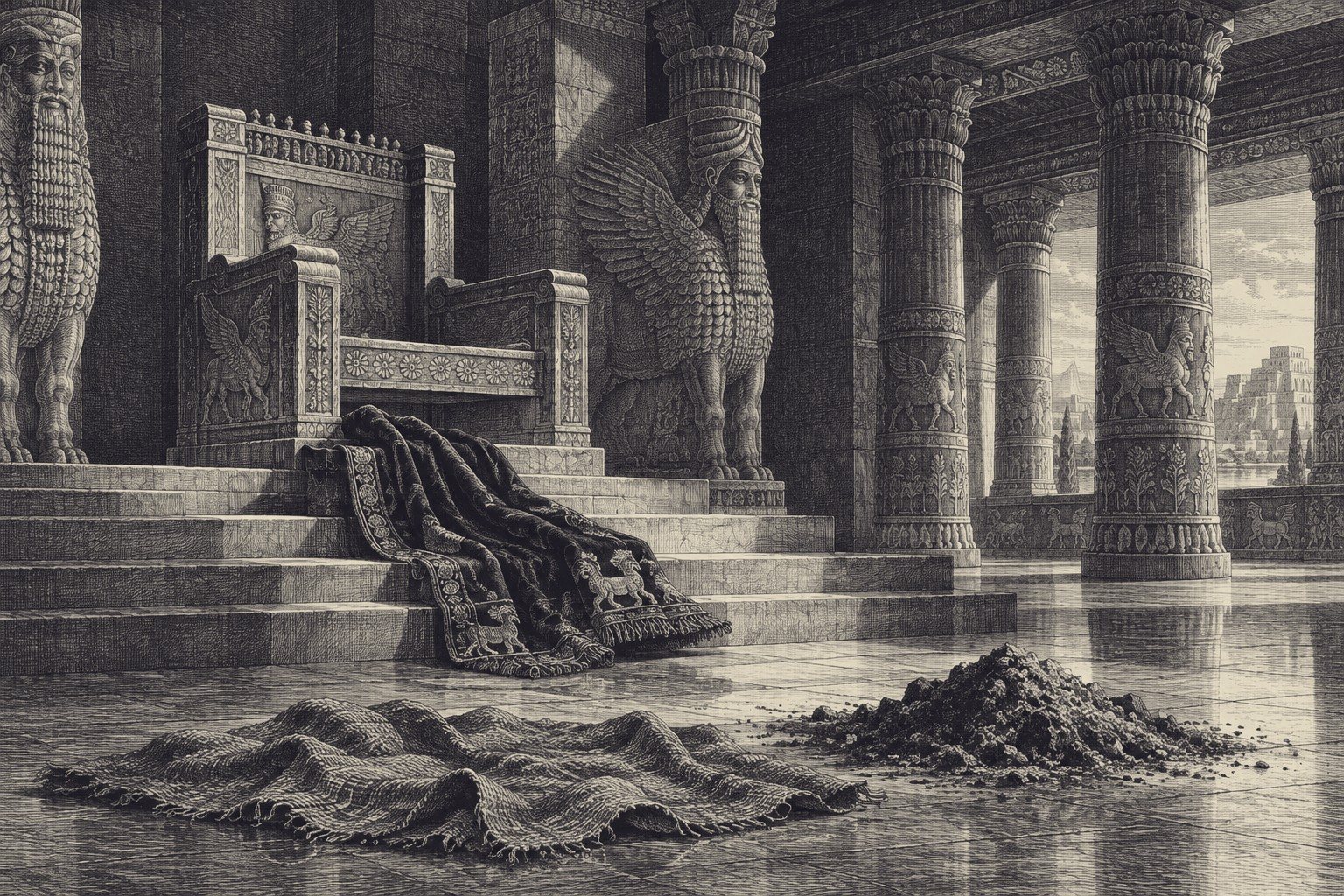
A coarse cloth of goat’s or camel’s hair worn next the skin, with ashes on the head: the dress of mourning and penance throughout the Old Testament, here put on beasts as well as men.
- Exceedingly troubled7:00
“His concern was lest he should pass for a false prophet; or rather, lest God’s word, by this occasion, might come to be slighted and disbelieved.” Challoner’s note on this verse.
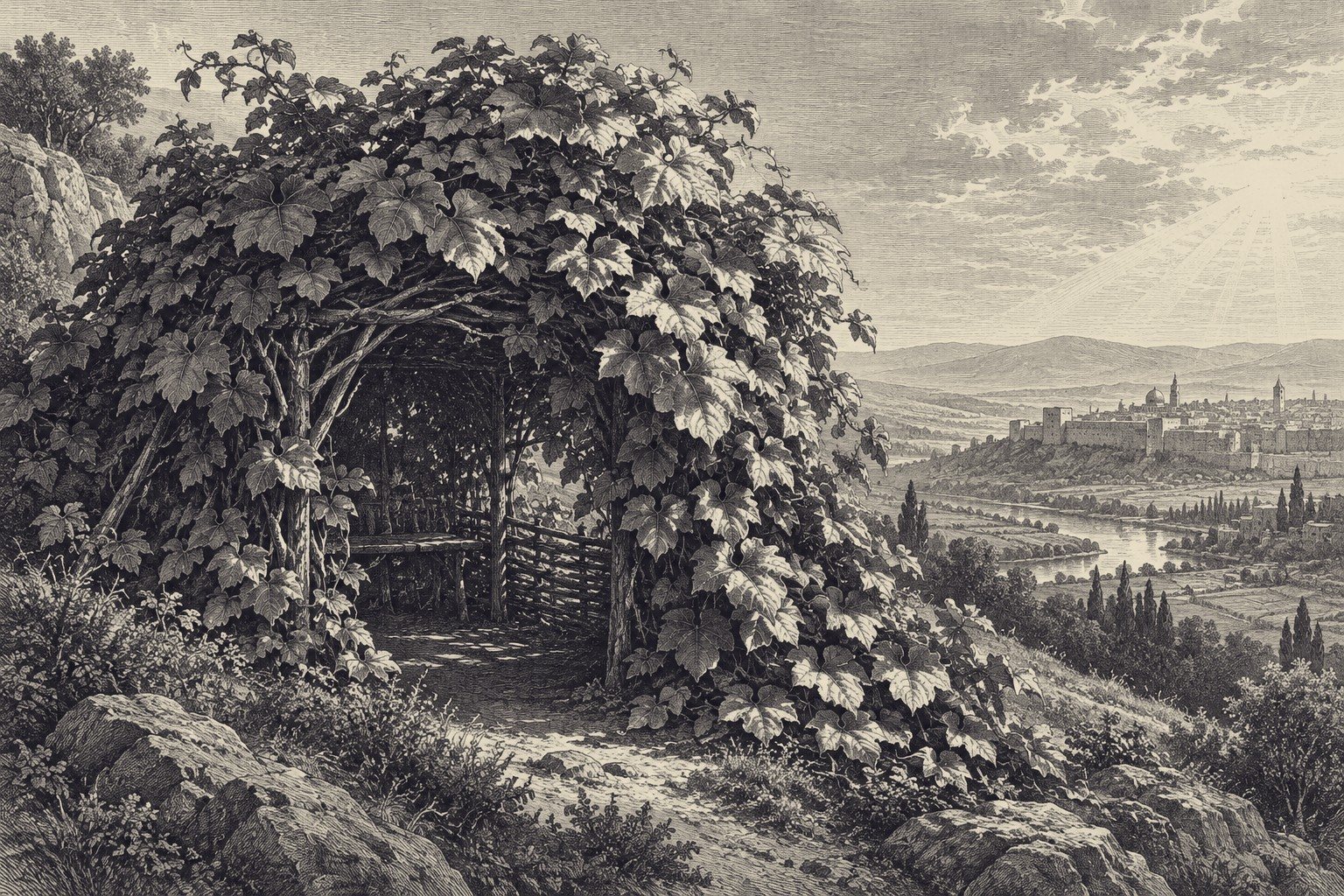
- The ivy7:58
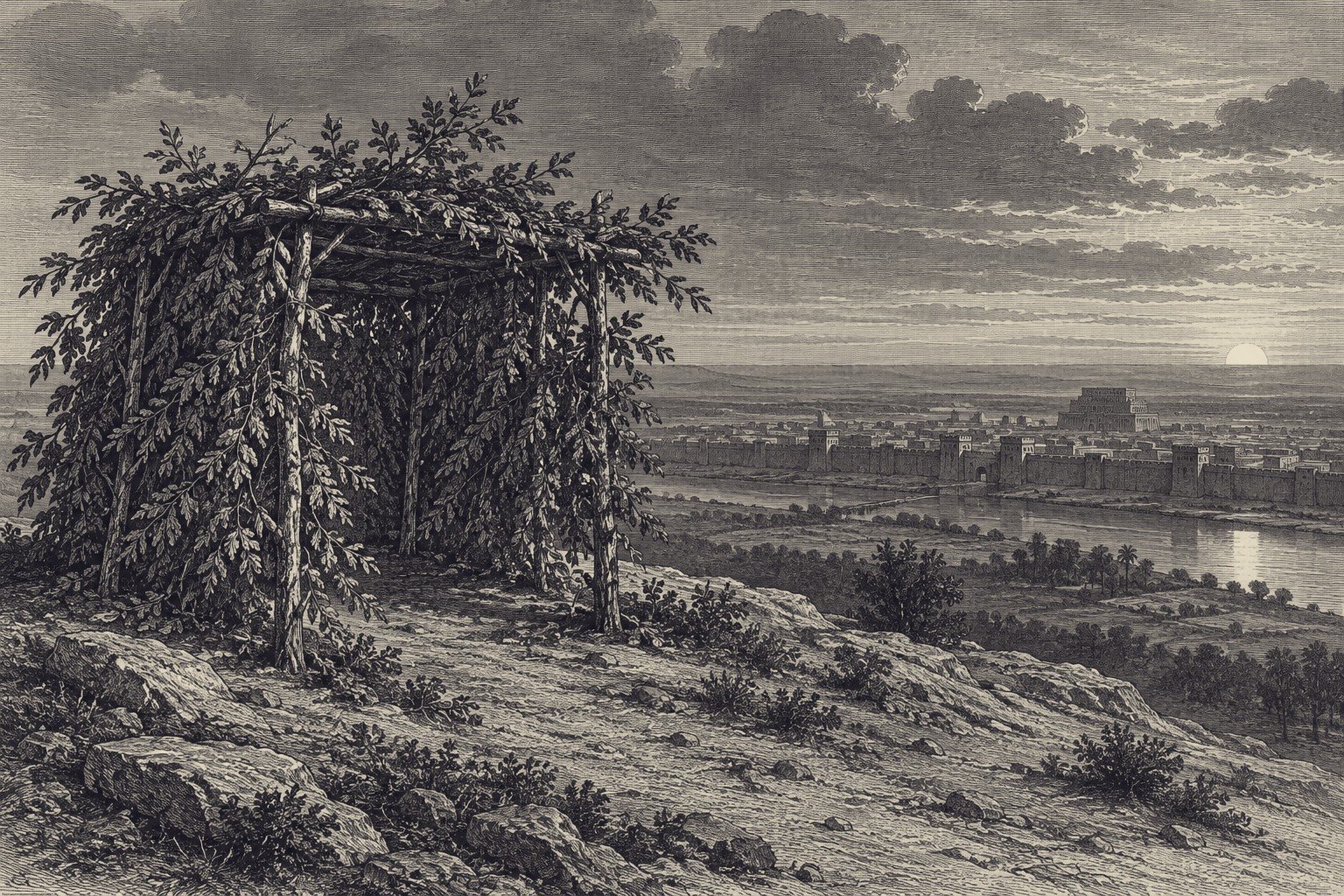
“Hederam. In the Hebrew it is Kikajon, which some render a gourd: others a palmerist, or palma Christi.” Challoner’s note. The Authorised Version has ‘gourd’; palma Christi is the castor-oil plant.
- A hundred and twenty thousand9:09
The book’s own count of Ninive, of those ‘that know not how to distinguish between their right hand and their left’. The book ends on the Lord’s question; no answer of Jonas is recorded.