Douay form Philemon · New Testament · 25 verses
The shortest of St. Paul’s letters: twenty-five verses from a prisoner to a householder of Colossa, carried back by Onesimus, the servant who had run away and whom Paul now calls his son. Read complete in the Douay-Rheims, with the Latin Vulgate and the Spanish of Scío as further audio tracks to come, and Challoner’s introduction in the margin.
Audio in three languages, soon
- English — Douay-Rheims · Philemon · Challoner’s revision, 1749–1752 · the video’s own audio
- Latin — Clementine Vulgate · Rome, 1592 · recorded; coming to YouTube as an audio track
- Spanish — Felipe Scío de San Miguel · Valencia, 1790–93 · recorded; coming to YouTube as an audio track
The Latin and Spanish readings are finished and will be added to the video as audio tracks, with captions in all three languages, once YouTube allows it on this channel.
“The Epistle of St. Paul to Philemon”, The Holy Bible, Douay-Rheims version, as revised by Bishop Richard Challoner, 1749–1752, with his introduction (text from Project Gutenberg #1581). The second audio track reads the Clementine Vulgate (Sixto-Clementine, Rome, 1592) from the Latin printed in the Douay-Rheims and Latin Vulgate parallel at drbo.org, checked word for word against the eBible Clementine text. The third audio track reads the Spanish of Felipe Scío de San Miguel’s La Biblia Vulgata Latina traducida en español (Madrid, 1790–1793), with the spelling modernised. Public domain.
The whole epistle, all twenty-five verses, in Challoner’s Douay-Rheims. Two more audio tracks will follow on YouTube, reading the Latin of the Clementine Vulgate and the Spanish of Scío de San Miguel. Captions in all three languages come with them.
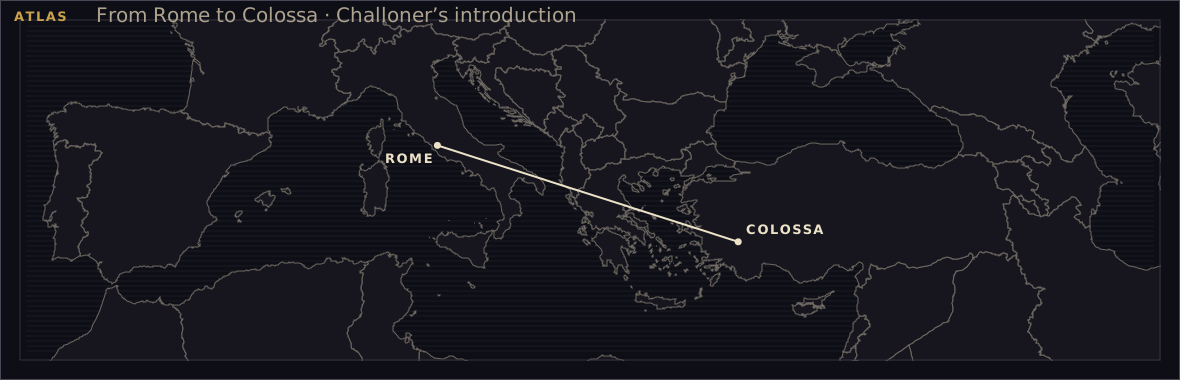
From Rome to Colossa · Challoner’s introduction — Rome · Colossa · at 1:42
- Philemon0:06
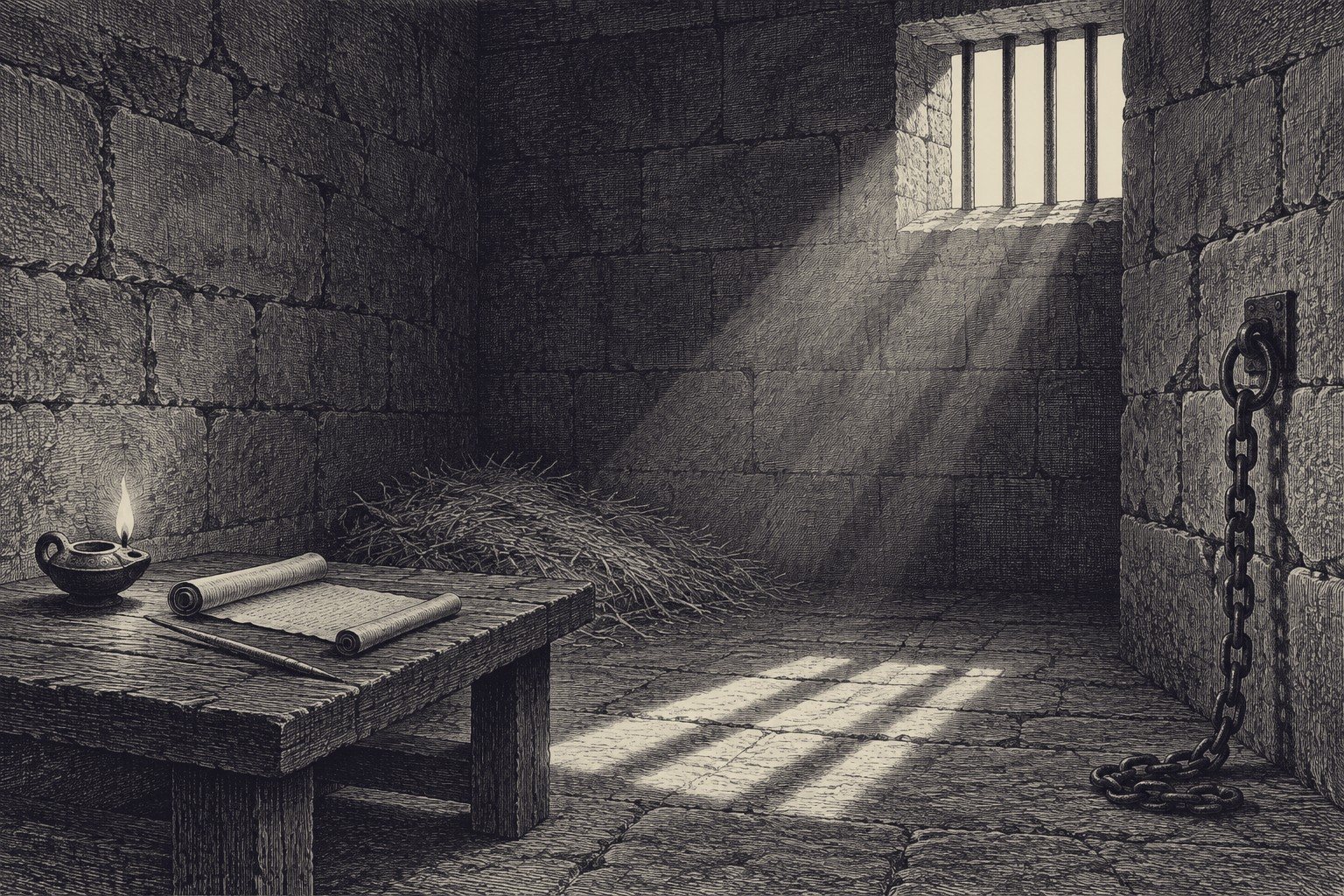
“Philemon, a noble citizen of Colossa, had a servant named Onesimus, who robbed him and fled to Rome, where he met St. Paul, who was then a prisoner there the first time… St. Paul sends him back to his master with this Epistle in his favour.” Challoner’s introduction, 1749–52.
- The names0:28
Douay forms, with the Greek: Appia (Apphia), Archippus, Onesimus, Epaphras. Philemon’s town is not named in the letter; Challoner’s introduction gives it as Colossa, the Colossae of the Greek.
- Colossa0:50
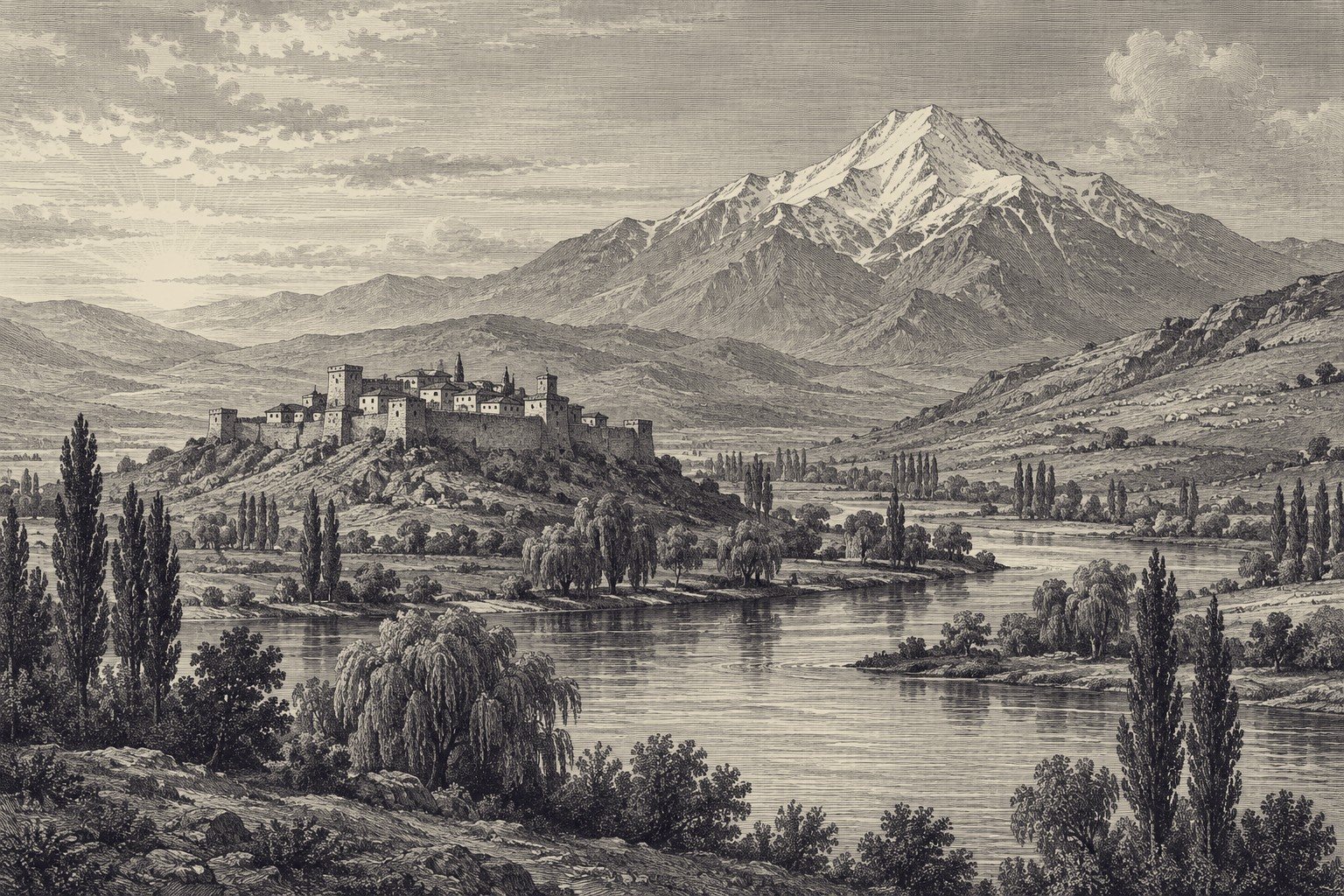
A town of Phrygia in the valley of the Lycus, near Laodicea and Hierapolis, which Paul’s Epistle to the Colossians names together (Colossians 4:13). That letter went to the same church and greets the same people.
- Bowels1:08
The Latin viscera, the Greek splanchna: the inward parts, used in Scripture for the seat of affection, as English says ‘the heart’. Challoner keeps the old word; it comes three times in this letter.
- Onesimus1:42
The name is Greek: onēsimos, ‘profitable’, ‘useful’. The verse before turns on it: ‘heretofore unprofitable to thee but now is profitable both to me and thee’.
- The Latin and the Spanish1:56
The second audio track reads the Clementine Vulgate, issued under Pope Clement VIII in 1592; the third, the Spanish that Felipe Scío de San Miguel made from that Latin (Valencia, 1790–93).
- Servant2:14
The Latin servus, the Greek doulos: a slave. The Douay keeps ‘servant’, as the Authorised Version does. Onesimus was Philemon’s slave, and the letter sends him home.
- With my own hand2:38
Paul’s letters were commonly dictated: in Romans the scribe signs himself, ‘I, Tertius, who wrote this epistle, salute you in the Lord’ (Romans 16:22). Here Paul writes the promise to repay in his own hand.
- The same names3:11
Onesimus, Archippus, Aristarchus, Mark, Epaphras, Luke and Demas all appear in the Epistle to the Colossians (Colossians 4:9–17), which was sent to the same church.